Will Autonomous Yard Dogs Replace Yard Jockey Jobs?
- Penny

- Nov 1, 2025
- 5 min read
Walk into any major distribution center and you'll see them: yard jockeys shuttling trailers around massive facilities, positioning them at loading docks, and keeping the whole operation flowing smoothly. It's skilled work that requires precision, experience, and quick decision-making.
Now, autonomous yard dogs are rolling onto these same lots, equipped with sensors, cameras, and AI that can supposedly do the same job. The big question everyone's asking: will these robots put yard jockeys out of work?
The short answer? Not as quickly or completely as you might think.
What Autonomous Yard Dogs Can Actually Do
Let's start with what these machines are capable of, because the technology has come a long way fast.
Modern autonomous yard trucks use a combination of deep learning, computer vision, and robotic systems to navigate yard operations. They can locate specific trailers in crowded yards, plot efficient routes around obstacles, and position trailers with centimeter-level accuracy at loading docks.
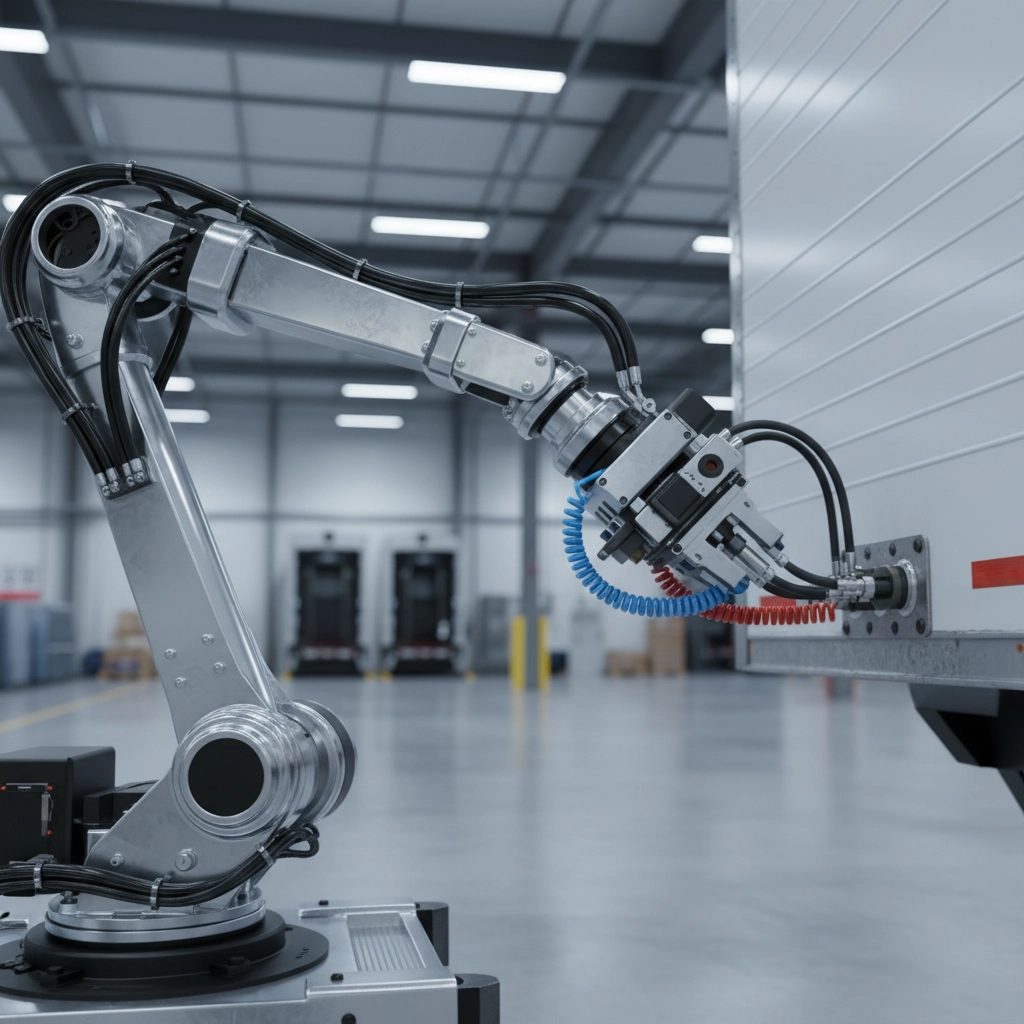
The most impressive part? They can autonomously connect to trailers using robotic arms that handle airline and brake line hookups: something that was considered nearly impossible to automate just a few years ago.
Companies like Outrider have deployed these systems at facilities that handle a significant chunk of North America's yard truck operations. Their latest systems use reinforcement learning that's made path planning 10 times faster than previous versions.
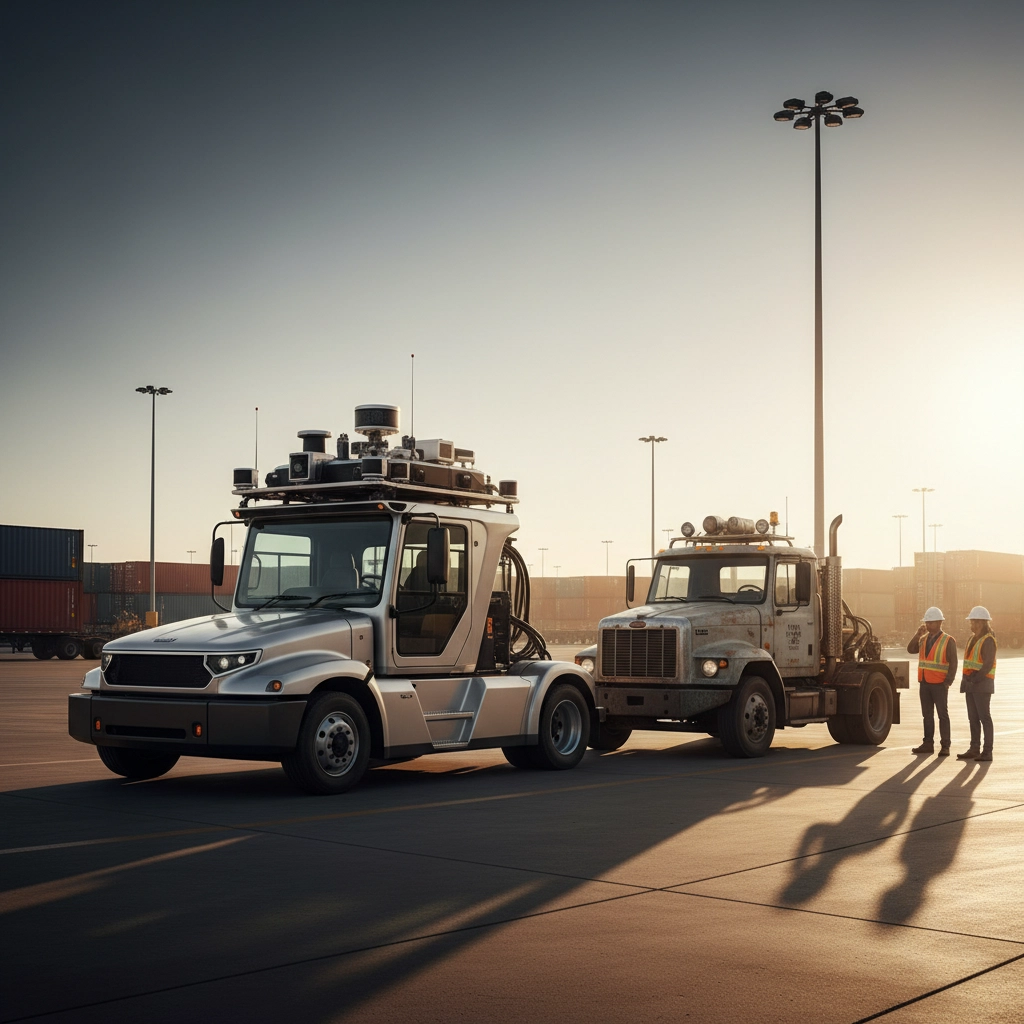
But here's where it gets interesting: even with all this tech, the industry consensus isn't that these machines will eliminate jobs. Instead, they're being positioned as tools that will work alongside human operators.
The Reality Check: Technical Limitations
Despite the impressive capabilities, autonomous yard dogs still struggle with situations that human yard jockeys handle without thinking twice.
Equipment Variations: Every trailer is slightly different. Some have worn coupling mechanisms, others have non-standard configurations. Autonomous systems work great with standardized equipment but can get stumped by the kind of variations that are routine in real-world operations.
Weather and Visibility: Rain, snow, fog, and even bright sunlight can interfere with sensors and cameras. A human can adapt to these conditions instinctively, but autonomous systems often need to shut down or call for human intervention.
Exception Handling: What happens when a trailer is parked in an unexpected spot, or when there's debris blocking a planned route? Humans excel at creative problem-solving, while current AI systems need clear parameters to operate effectively.
Maintenance and Downtime: Autonomous systems require regular maintenance, software updates, and occasional repairs. When a yard dog breaks down, you need qualified technicians, not just a mechanic with basic tools.
The Economics: Why Companies Are Interested
The business case for autonomous yard dogs isn't just about replacing workers: it's about solving operational challenges that many facilities face.
Labor Shortages: Finding qualified yard jockeys has become increasingly difficult. The job requires a CDL, experience with different trailer types, and the ability to work in all weather conditions. Many facilities struggle to keep these positions filled.
Consistency: Autonomous systems don't have bad days, don't take breaks, and don't call in sick. For facilities running 24/7 operations, that consistency has real value.
Safety: Yard accidents are expensive. Insurance costs, workers' comp claims, and equipment damage add up quickly. Autonomous systems could potentially reduce some of these risks, though they create new ones.
Data and Optimization: Autonomous yard dogs generate massive amounts of operational data that can help facilities optimize their layouts, identify bottlenecks, and improve overall efficiency.
However, the upfront costs are substantial. A single autonomous yard truck can cost several times more than a traditional one, and that doesn't include the infrastructure needed to support the technology.
Safety: The Double-Edged Sword
Safety is often cited as a major benefit of autonomous yard operations, but the reality is more complex.
On the positive side, autonomous systems don't get tired, distracted, or impatient. They follow programmed safety protocols consistently and can be equipped with sensors that detect pedestrians and obstacles from multiple angles simultaneously.
But they also introduce new risks. When an autonomous system malfunctions or encounters a situation it wasn't programmed for, the results can be unpredictable. Human workers need to understand how to safely interact with these machines, which requires new training and safety protocols.
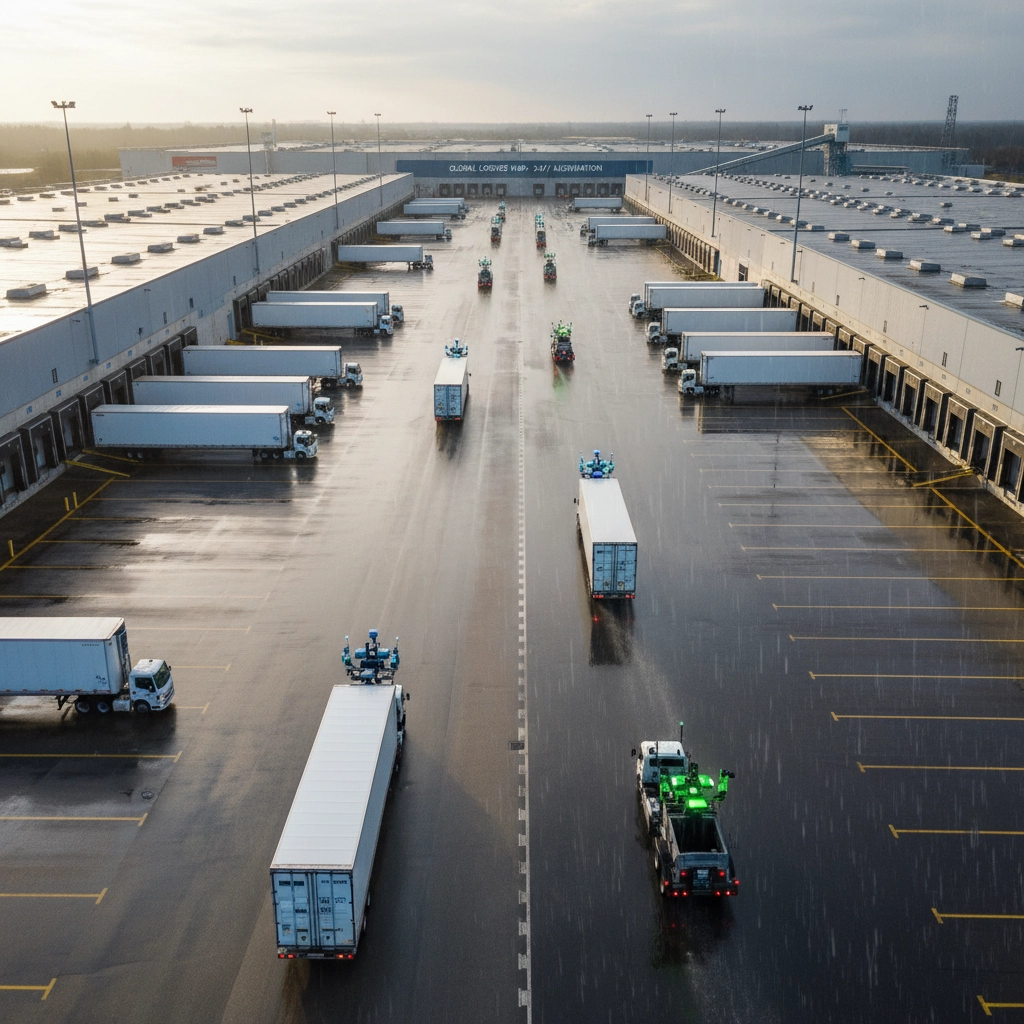
Most facilities implementing autonomous yard dogs are doing so in phases, starting with controlled areas or specific tasks, rather than full automation right away.
Current Adoption: Slower Than the Hype
Despite the technological capabilities, widespread adoption is happening more gradually than early predictions suggested.
Most deployments are still in pilot phases or limited to specific operations within larger facilities. Companies are taking a cautious approach, testing the technology in controlled environments before expanding its use.
The facilities that have had the most success tend to be:
Large, standardized operations with predictable workflows
New facilities designed with automation in mind
Companies with dedicated IT and maintenance resources
Smaller facilities, older yards with irregular layouts, and operations that handle diverse equipment types are finding the transition more challenging.
What This Means for Yard Jockeys
The evidence suggests that rather than eliminating yard jockey positions, autonomous technology will likely change what these jobs look like.
Evolving Responsibilities: Instead of spending all day driving, yard jockeys might focus more on oversight, troubleshooting, and handling exceptions that autonomous systems can't manage.
New Skills Required: Workers will need to learn how to operate alongside autonomous systems, understand basic troubleshooting, and possibly manage multiple automated units.
Higher-Value Work: With routine tasks handled by machines, human workers can focus on more complex problem-solving and customer service aspects of the job.
Hybrid Operations: Many facilities are moving toward models where autonomous systems handle routine, predictable tasks while humans manage exceptions and complex situations.
Timeline: What Companies Should Expect
If you're considering autonomous yard dogs for your facility, here's a realistic timeline:
Short Term (1-2 years): Limited deployment in controlled environments, focused on specific tasks or areas of your operation. Expect significant human oversight and occasional shutdowns for technical issues.
Medium Term (3-5 years): Broader implementation as technology improves and costs come down. Hybrid operations become more common, with humans and machines working together.
Long Term (5+ years): More autonomous capabilities, but likely still requiring human oversight for complex situations and maintenance.
Full automation: where humans are completely removed from yard operations: remains years away for most facilities, if it happens at all.
Making the Decision
For companies considering autonomous yard dogs, the question isn't whether the technology will eventually replace all yard jockeys, but whether it makes sense for your specific operation right now.
Consider autonomous yard dogs if you:
Have standardized operations with predictable workflows
Struggle with labor shortages or high turnover
Can invest in the infrastructure and maintenance requirements
Want to collect operational data for optimization
Stick with traditional operations if you:
Have irregular layouts or non-standard equipment
Handle diverse types of trailers and cargo
Lack dedicated IT and maintenance resources
Need maximum flexibility in your operations
The Bottom Line
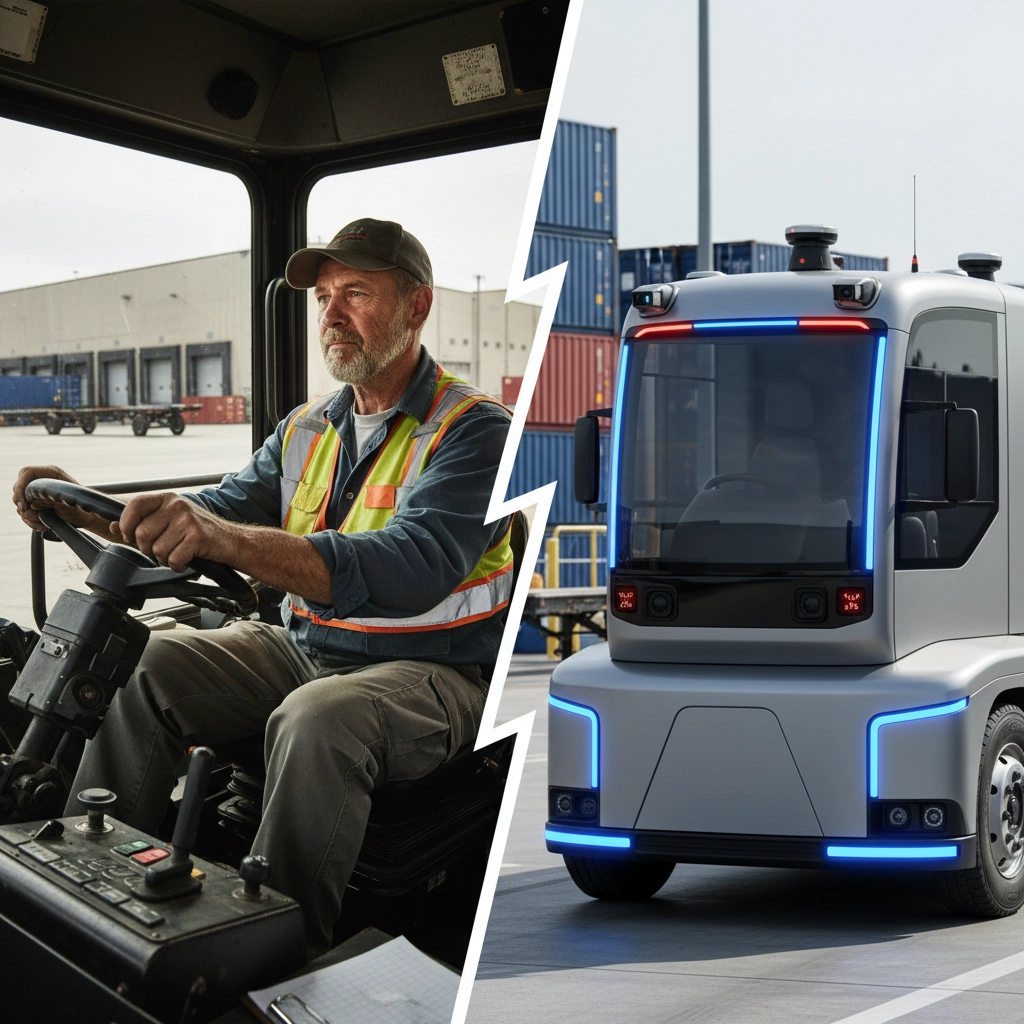
Will autonomous yard dogs replace yard jockey jobs? The evidence suggests they'll change these jobs rather than eliminate them entirely.
The most successful implementations are treating automation as a tool to augment human capabilities rather than replace them completely. Facilities that embrace this hybrid approach are seeing the biggest benefits: improved efficiency, better safety records, and more satisfied workers who can focus on higher-value tasks.
For the freight industry, this probably means a gradual evolution rather than a sudden disruption. Yard jockeys who adapt and learn to work with autonomous systems will likely find their skills more valuable, not less.
The companies that will benefit most are those that approach automation thoughtfully, investing in both technology and their people to create operations that leverage the strengths of both.
Comments