The Ultimate Guide to Flatbed Shipping: Everything Construction Companies Need to Succeed
- Penny

- Oct 26, 2025
- 5 min read
If you're managing construction projects, you know that getting materials and equipment to job sites on time can make or break your timeline. Whether it's steel beams, heavy machinery, or oversized prefab components, flatbed shipping is often your best: and sometimes only: option for transportation.
This guide breaks down everything you need to know about flatbed shipping as a construction professional, from understanding different trailer types to avoiding costly mistakes that can derail your projects.
What is Flatbed Shipping?
Flatbed shipping uses open-deck trailers without walls or roofs to transport cargo that won't fit in standard enclosed trailers. For construction companies, this flexibility is game-changing. You can move oddly-shaped materials, oversized equipment, and loads that need to be crane-loaded from the top or sides.
Think of it as the Swiss Army knife of freight transportation: versatile, reliable, and specifically designed for the unique challenges construction companies face every day.
Types of Flatbed Trailers for Construction
Not all flatbeds are created equal. Understanding which type works best for your specific cargo can save you time, money, and headaches:
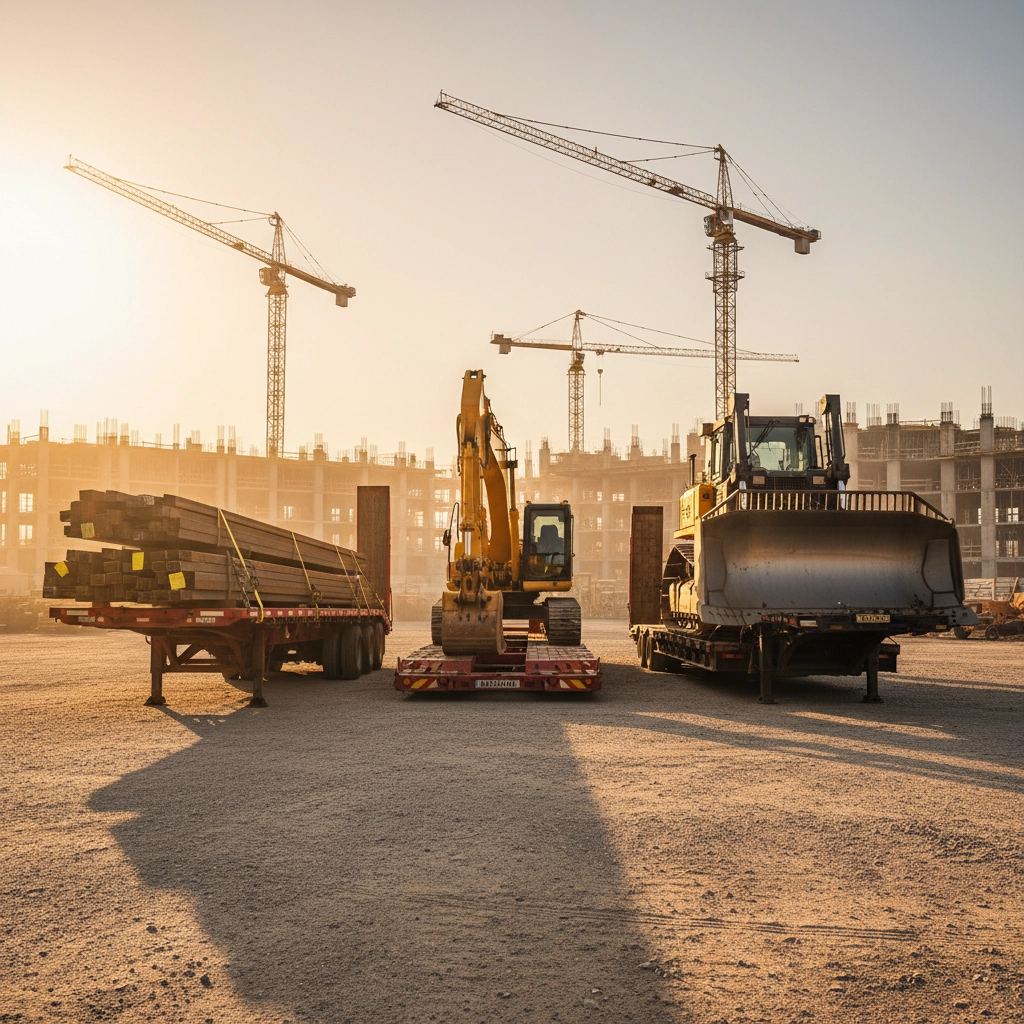
Standard Flatbeds (48-53 feet): Perfect for lumber, steel beams, and most construction materials. Maximum height of 8.5 feet from ground level.
Step Deck Trailers: Feature a lower deck height, ideal for taller equipment like excavators and cranes while staying within legal height limits.
Double Drop/RGN (Removable Gooseneck): The heavy-duty option for your biggest machines. The detachable front allows equipment to drive directly onto the trailer.
Stretch Trailers: Extendable up to 80+ feet for those extra-long loads like bridge beams and wind turbine blades.
What Construction Companies Ship on Flatbeds
Construction flatbed shipping covers a surprisingly wide range of materials and equipment:
Raw Materials
Steel beams, rebar, and structural steel
Lumber, plywood, and engineered wood products
Precast concrete components
Large diameter pipes and culverts
Roofing materials and trusses
Heavy Equipment
Excavators and bulldozers
Cranes and boom lifts
Concrete pumps and mixers
Generators and compressors
Prefabricated Components
Wall panels and modular sections
HVAC units
Electrical substations
Storage tanks
The key advantage? Flatbeds let you move materials that would be impossible or prohibitively expensive to transport any other way.
The Flatbed Shipping Process: What to Expect
Understanding the process helps you plan better and communicate effectively with your carrier:
1. Load Planning and Permits
Your carrier handles route planning and permit acquisition for oversized loads. This includes identifying bridge clearances, weight restrictions, and required escort vehicles.
2. Loading and Securing
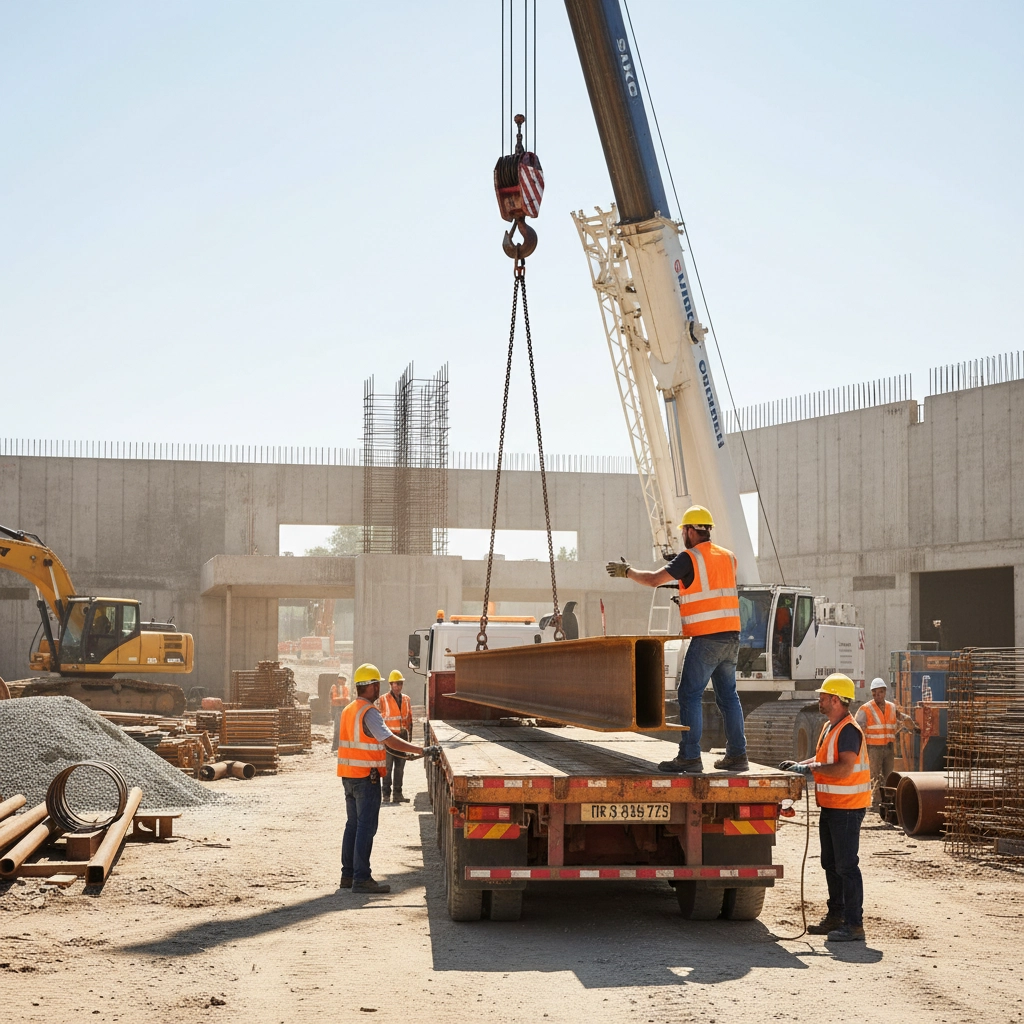
Professional loading requires specialized equipment like cranes or forklifts. The carrier's driver supervises to ensure proper weight distribution: critical for safe transport.
3. DOT-Compliant Securement
All cargo must meet Department of Transportation guidelines. This typically involves:
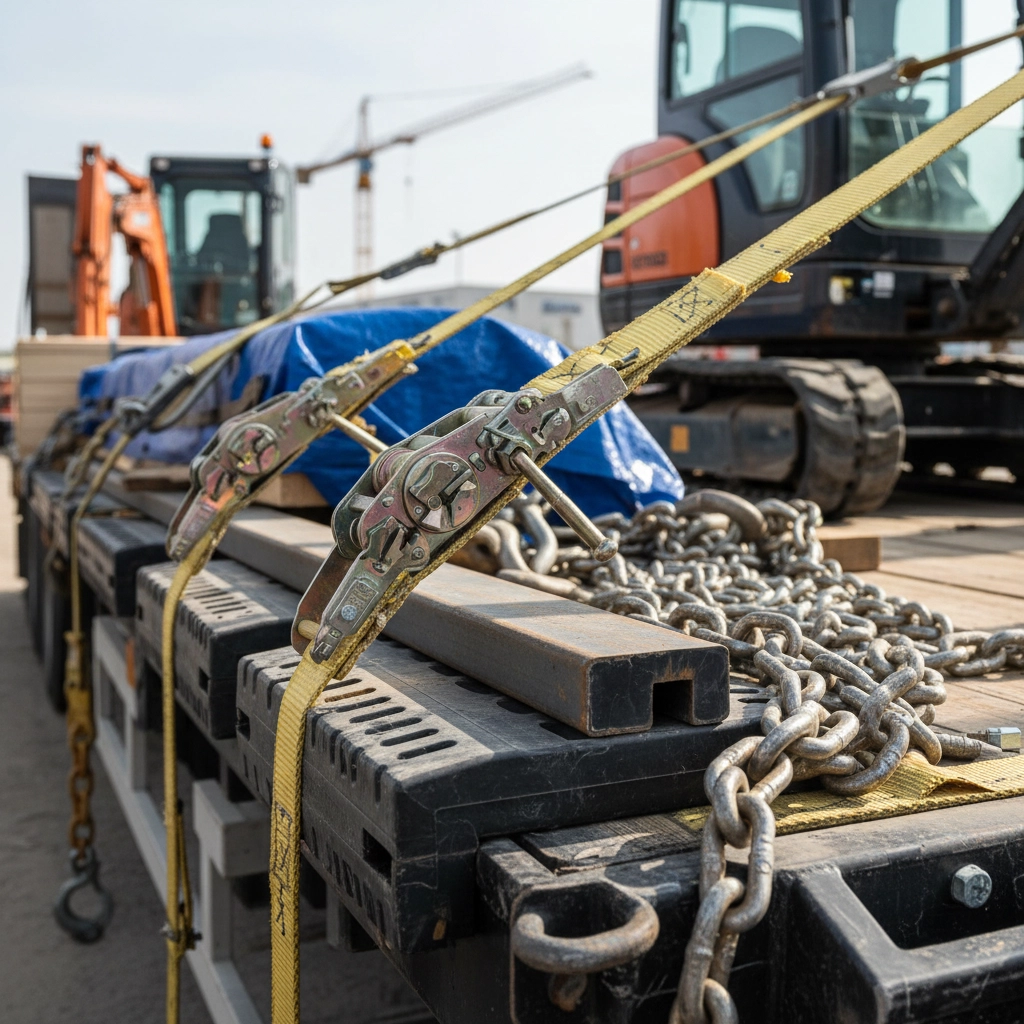
Heavy-duty straps rated for the specific load weight
Chains for machinery and steel products
Edge protectors to prevent load shifting
Weatherproof tarps when required
4. Transit Monitoring
Professional drivers continuously monitor load securement throughout transit, making adjustments as needed and conducting mandatory inspection stops.
Insurance and Safety Essentials
Construction materials and equipment represent significant investments. Here's what you need to know about protection:
Insurance Coverage
Cargo Insurance: Covers your materials during transit
Liability Coverage: Protects against third-party damages
Equipment Coverage: Specific protection for machinery and tools
Safety Requirements
Drivers must hold CDL licenses with proper endorsements
Regular equipment inspections and maintenance
DOT compliance for hours of service and vehicle condition
Specialized training for oversized and heavy haul operations
Key Regulations for Construction Flatbed Shipping
Staying compliant protects your projects and avoids costly delays:
Weight Limits
80,000 pounds gross vehicle weight on interstate highways
Individual axle weight limits (typically 12,000-34,000 pounds)
Bridge formula calculations for load distribution
Dimensional Restrictions
8.5 feet maximum width (without permits)
13.6 feet maximum height
Length varies by trailer type and state regulations
Permit Requirements
Oversized or overweight loads require special permits, which professional carriers handle on your behalf. Processing times vary by state but typically take 3-5 business days.
Common Flatbed Shipping Mistakes to Avoid
Learn from others' costly errors:
1. Inadequate Load Planning
Mistake: Not calculating total weight including trailer, fuel, and securement equipment. Solution: Work with carriers who provide detailed weight calculations and route analysis.
2. Poor Communication About Loading Requirements
Mistake: Assuming the job site has appropriate loading/unloading equipment. Solution: Clearly specify crane requirements, dock access, and ground conditions during booking.
3. Ignoring Weather Considerations
Mistake: Scheduling deliveries without considering seasonal weather patterns. Solution: Build buffer time for weather delays, especially during winter months and storm seasons.
4. Choosing Carriers Based on Price Alone
Mistake: Selecting the lowest bidder without considering experience and reliability. Solution: Evaluate carriers based on safety records, equipment quality, and construction industry experience.
5. Last-Minute Booking for Specialized Equipment
Mistake: Waiting until the last minute to arrange transport for oversized or heavy equipment. Solution: Book specialized flatbed capacity 2-3 weeks in advance, especially during peak construction seasons.
Choosing the Right Flatbed Carrier
The right carrier becomes a true partner in your project success. Here's what to look for:
Experience in Construction
Proven track record with similar materials and equipment
Understanding of job site requirements and constraints
Knowledge of construction industry timing and urgency
Equipment and Capabilities
Modern, well-maintained trailer fleet
Proper securement equipment and tarping systems
Specialized trailers for your specific needs
Service Quality
Dedicated account management
Real-time tracking and communication
Proactive problem-solving and contingency planning
Compliance and Safety
Excellent safety ratings and DOT compliance
Comprehensive insurance coverage
Background-checked, experienced drivers

How IMFX Supports Construction Companies
At IMFX, we understand that construction projects don't wait. Our extensive network of qualified flatbed carriers specializes in construction materials and equipment, giving you access to:
Heavy-duty capacity for your largest machinery and materials
Expedited services for time-critical deliveries
Specialized handling for fragile or sensitive equipment
Oversized load expertise with full permit and escort coordination
We've built relationships with carriers who understand construction timelines and the importance of reliable delivery. When your project depends on materials arriving on schedule and in perfect condition, IMFX ensures you have the flatbed capacity you need.
Planning Your Next Flatbed Shipment
Success with flatbed shipping starts with proper planning. Consider these factors for your next shipment:
Lead time: Book specialized equipment transport at least 2 weeks in advance
Site access: Verify crane availability and ground conditions for loading/unloading
Permits: Factor permit processing time into your delivery schedule
Weather windows: Plan around seasonal weather patterns that could impact delivery
Backup plans: Identify alternative carriers and routes for critical deliveries
The construction industry moves fast, but successful projects are built on careful planning and reliable partnerships. Understanding flatbed shipping: from trailer types to carrier selection: gives you the knowledge to keep your materials flowing and your projects on schedule.
Whether you're moving steel for a high-rise or transporting excavators to a new development, the right flatbed shipping strategy ensures your materials arrive safely, on time, and ready to keep your project moving forward.
Comments