How to Find Reliable Carriers in 2025: The Complete Guide to Avoiding Headaches
- Penny

- Oct 20, 2025
- 5 min read
Finding a trustworthy carrier in 2025 feels harder than ever. Between driver shortages, rising freight fraud, and new regulations, shippers are dealing with challenges that didn't exist just a few years ago. But here's the thing: reliable carriers are still out there. You just need to know how to find them.
Whether you're a small manufacturer shipping to distributors or a retailer moving inventory across the country, this guide will walk you through exactly how to vet carriers and avoid the headaches that come with choosing the wrong one.
Start With the Basics: Verify Their Credentials
Before you even think about rates or service, make sure you're dealing with a legitimate carrier. Every trucking company should have an active DOT number and proper FMCSA registration. This isn't just paperwork: it's proof they're licensed, insured, and following federal regulations.
Here's how to check:
Visit the FMCSA website and search their DOT number
Verify their insurance coverage is current and adequate
Check that their operating authority matches what they're claiming to haul
Red flags? A carrier that can't immediately provide their DOT number, has expired registrations, or gets defensive when you ask for credentials. Walk away: fast.

Dig Into Their Safety Record
A carrier's safety history tells you everything about how they operate. The FMCSA's SAFER system gives you access to crash records, violations, and overall safety ratings. You want carriers with clean records, not ones with a history of accidents or regulatory violations.
Look for:
Low accident rates compared to industry averages
Few or no serious violations in the past two years
Good safety ratings from DOT inspections
Driver shortages in 2025 mean some carriers are hiring less experienced drivers or cutting corners on training. A solid safety record shows they're not compromising on standards just to fill seats.
Check What Real Customers Are Saying
Online reviews matter, but you need to read between the lines. Look for detailed feedback about communication, on-time delivery, and how they handle problems. Pay special attention to reviews that mention damage claims: how quickly did the carrier respond? Were they easy to work with?
Don't just stick to Google reviews. Check industry-specific sites and ask for references from similar businesses. A carrier that's great for auto parts might struggle with fragile electronics.
Make Sure They Have the Right Insurance
This is where many shippers get burned. Standard cargo insurance requirements vary, but you want carriers with at least $100,000 in cargo coverage for most freight. For high-value shipments, you'll need more: sometimes $250,000 to $500,000.
Here's the catch: don't just take their word for it. Ask for a certificate of insurance and call their insurance company to verify coverage is current. Freight fraud is exploding in 2025, and fake insurance certificates are becoming more common.
Test Their Technology and Communication
Reliable carriers in 2025 should offer real-time tracking and proactive communication. Test their systems before committing to a shipment. Can you easily track your freight? Do they provide accurate ETAs? How quickly do they respond to questions?
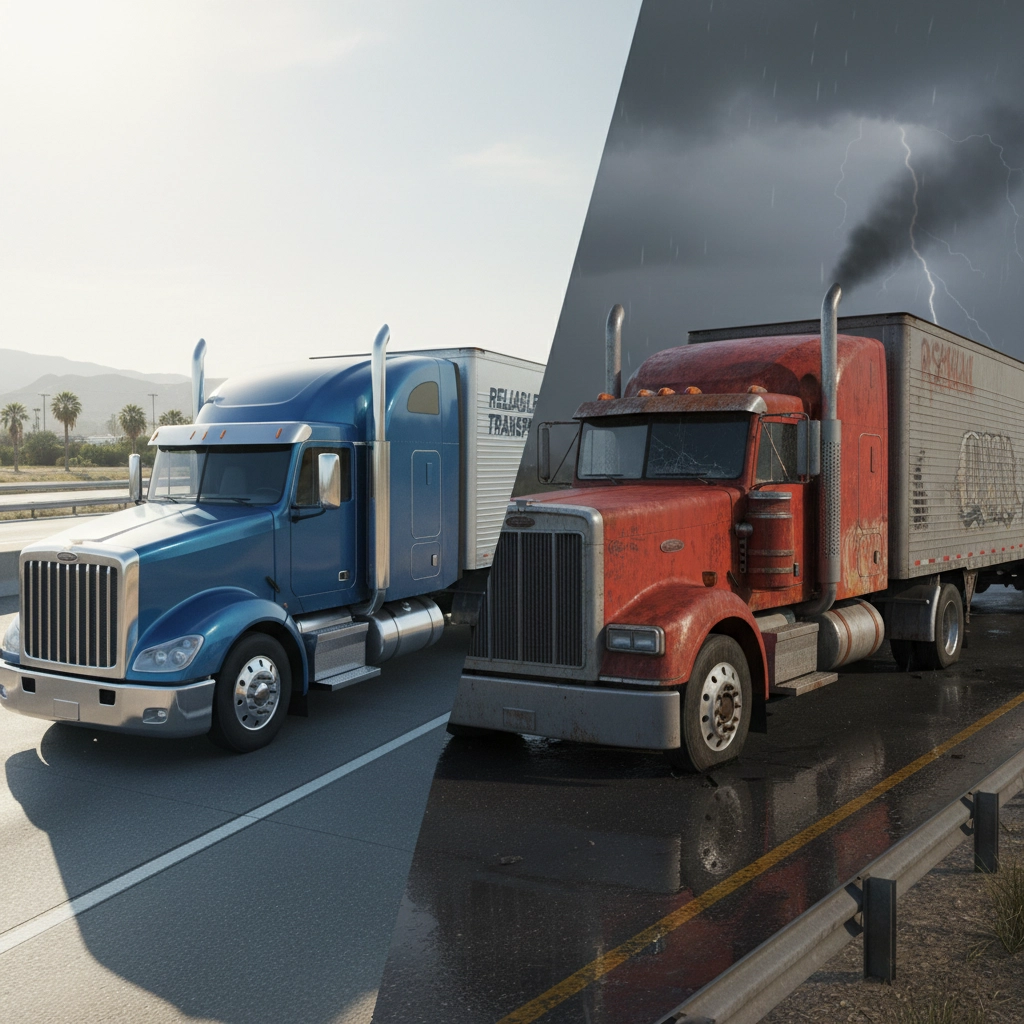
Poor communication often signals bigger operational problems. If a carrier takes hours to respond to simple questions during the quoting process, imagine how long you'll wait when there's an actual problem with your shipment.
Understand Their Specialization
Not all carriers are created equal. Some excel at LTL shipments, others specialize in full truckload. Some have refrigerated capabilities, others focus on hazmat. Make sure their strengths align with your specific needs.
Ask about:
The types of freight they typically handle
Their experience with your industry
Equipment they use (truck types, loading equipment, securement)
Geographic coverage in your shipping lanes
A carrier that's new to your type of freight might offer a great rate, but they're also more likely to make costly mistakes.
Look at Equipment Quality and Maintenance
Well-maintained trucks and trailers aren't just about appearances: they reduce breakdown risks and protect your freight. When possible, visit their facilities or ask for photos of the equipment that will handle your shipment.
Signs of a professional operation:
Clean, well-maintained trucks
Proper loading equipment and securement
Modern fleet with newer vehicles
Organized, clean facilities
Carriers struggling financially often defer maintenance, which puts your freight at risk.
Navigate the Rate Comparison Carefully
Here's where it gets tricky. The cheapest rate usually isn't the best deal when you factor in insurance coverage, service reliability, and damage rates. 2025 has seen general rate increases of about 5.9% across major carriers, plus expanded peak-season surcharges.

When comparing rates:
Make sure you're comparing similar service levels
Factor in insurance coverage and claims handling
Consider total cost, including potential damage claims
Ask about peak-season or surge pricing
Document Everything Before Pickup
Protect yourself by documenting your freight's condition before the carrier takes possession. Take timestamped photos from multiple angles, noting any existing damage, packaging condition, and item count.
For vehicle shipments, this is especially critical: document mileage, existing scratches, and overall condition. This documentation becomes your best defense if you need to file a damage claim later.
Build Relationships, But Don't Put All Your Eggs in One Basket
Once you find reliable carriers, nurture those relationships. Loyal customers often get priority service, better rates, and more flexibility during capacity crunches. But don't become completely dependent on one carrier.
Maintain relationships with 2-3 reliable providers. This gives you options when your primary carrier faces capacity constraints or service disruptions: both increasingly common in 2025's volatile freight market.
Red Flags That Should Make You Run
Some warning signs are too big to ignore:
Asking for payment upfront (legitimate carriers bill after delivery)
Rates significantly below market average
No physical address or facility
Reluctance to provide credentials or insurance proof
Poor communication or unprofessional interactions
No online presence or customer reviews
Trust your instincts. If something feels off, it probably is.
How IMFX Makes This Process Easier
Here's the truth: vetting carriers takes time you probably don't have. That's where IMFX comes in. We've already done the heavy lifting, building relationships with pre-qualified, reliable carriers across different service types and geographic regions.
Our carrier network includes only companies that meet strict safety, insurance, and performance standards. We monitor their performance continuously, so you don't have to worry about whether they're still reliable six months from now.
Plus, we understand the unique challenges facing shippers in 2025. Driver shortages, increased fraud, changing regulations: we stay on top of these issues so they don't become your problems.

The Bottom Line
Finding reliable carriers in 2025 requires more diligence than ever, but it's absolutely doable. Focus on credentials, safety records, and real customer experiences rather than just chasing the lowest rates. Take time to document everything and build relationships with carriers who prove themselves reliable.
Most importantly, don't try to do this alone. The freight landscape is more complex than it's ever been, and the cost of choosing the wrong carrier keeps going up.
Ready to skip the carrier vetting headaches? Reach out to IMFX today. We'll connect you with pre-qualified, reliable carriers that match your specific shipping needs: so you can focus on running your business instead of worrying about whether your freight will arrive on time and intact.
Contact us for a personalized consultation and see how our carrier network can solve your shipping challenges.
Comments