Diesel & Maintenance Costs: The Hidden Profit Killers in Trucking
- Penny

- Nov 2, 2025
- 5 min read
Everyone talks about fuel prices. Every trucker watches the pump, every fleet manager tracks fuel costs per mile, and every news story about trucking mentions diesel hitting $4 or $5 per gallon.
But here's what's really happening: while everyone's focused on fuel, maintenance and repair costs are quietly eating profits alive.
Sure, diesel is expensive and volatile. But the real profit killers? DEF system failures that strand trucks for days. Aftertreatment systems that force costly regens. Sensors that fail and can't be found anywhere. OEM parts on 8-week backorder. And shop labor rates that hit $225 per hour in some markets.
If you're running trucks right now, you know exactly what we're talking about.
The Diesel Problem We All See
Let's start with what everyone already knows. Diesel costs are brutal and unpredictable. Regional pricing swings are massive, California truckers pay nearly $5 per gallon while Gulf Coast operators get diesel for $3.30. That's a $1.70 difference that can make or break route profitability.
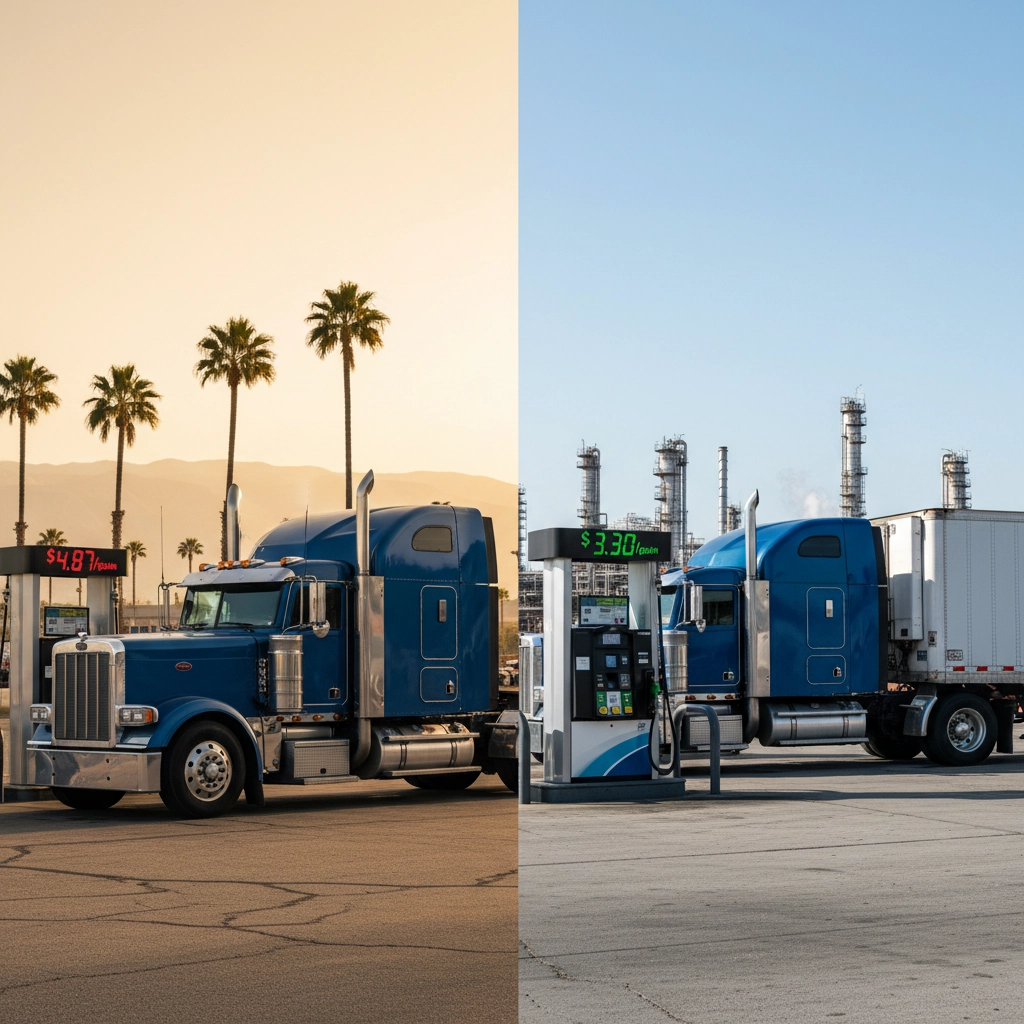
For a truck getting 6 miles per gallon, that price difference costs an extra $283 per 1,000 miles. Over a year, that's tens of thousands in additional fuel costs just based on geography.
But fuel costs are visible. You see them every time you fill up. You can track them, budget for them, and adjust rates accordingly. The real problem is everything else.
The Hidden Profit Killers
While fuel gets all the attention, repair and maintenance costs have exploded. Industry averages hit $0.196 per mile in 2022, a 12% jump from the previous year. But averages don't tell the whole story.
A single major repair can cost $15,000 to $25,000. That's not unusual anymore, it's typical. And it's not just the repair bill that hurts.
When a truck breaks down unexpectedly, the real costs multiply fast:
Lost revenue while the truck sits
Rental truck costs ($200-$300 per day)
Driver per diem and hotel costs
Missed delivery penalties
Customer relationship damage
The total cost of unplanned downtime ranges from $448 to $760 per day per truck. For a week-long repair, that's $3,000 to $5,000 in hidden costs on top of the actual repair bill.
The DEF and Aftertreatment Nightmare
Modern emissions systems are profit killers. DEF (diesel exhaust fluid) systems fail constantly, and when they do, trucks go into limp mode or shut down entirely. The sensors are finicky, the pumps fail, and the whole system is overly complex for what it does.
Aftertreatment systems force expensive regeneration cycles that burn extra fuel and create downtime. Drivers report spending 2-3 hours per week dealing with regen cycles. That's 100+ hours per year of unproductive time per truck.
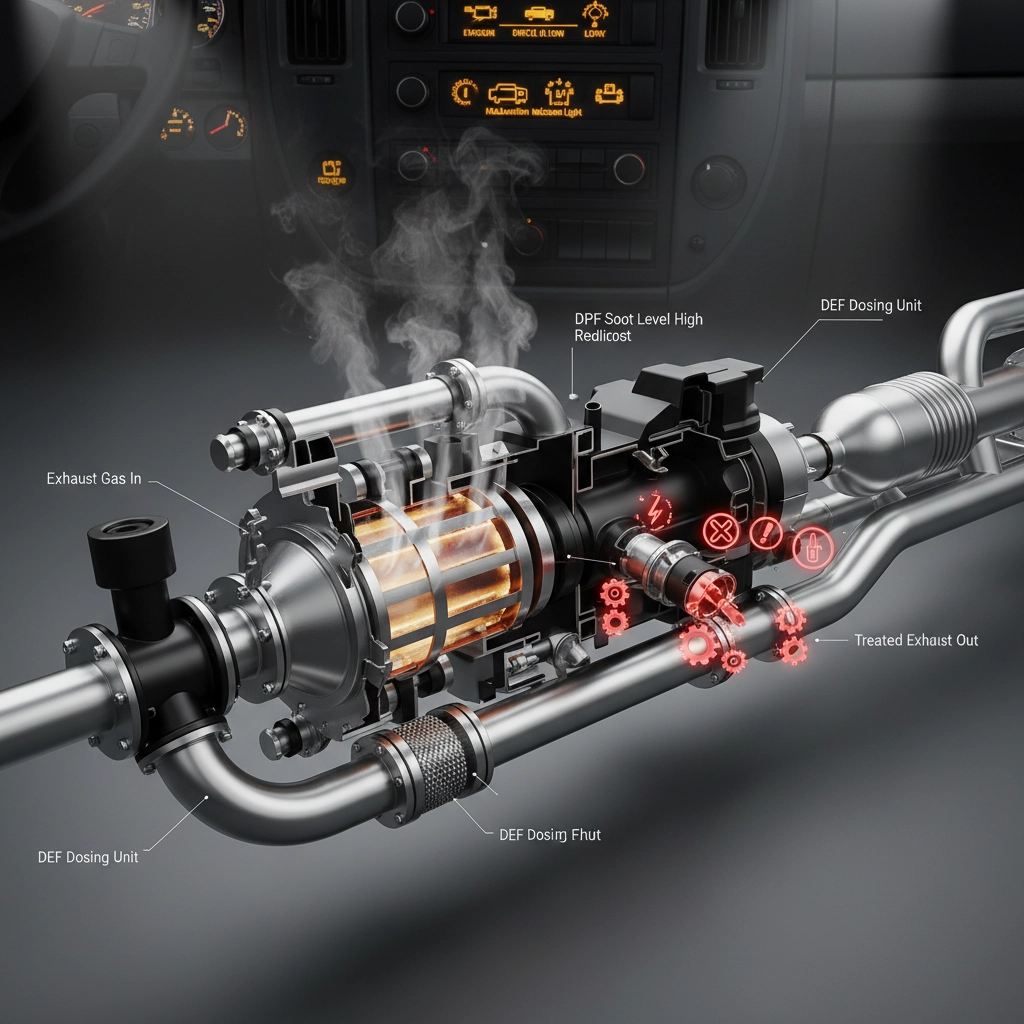
DPF (diesel particulate filter) cleanings that used to cost $200 now run $500-800. And if the DPF cracks or fails completely? You're looking at $3,000-5,000 replacement costs.
The sensors that monitor these systems are another nightmare. NOx sensors, temperature sensors, pressure sensors, they fail regularly and often cost $500-1,500 each to replace. When they're actually available.
Parts Shortage and Labor Rate Crisis
Here's where things get really ugly: you can't get parts, and when you can, labor rates are through the roof.
OEM parts are regularly on 6-12 week backorder. Critical sensors, ECM modules, and aftertreatment components that used to be shelf items now require advance planning and luck. Independent shops are struggling to get quality aftermarket alternatives that work reliably with modern emission systems.
Labor rates have exploded. Major truck stops and dealerships are charging $160-225 per hour for diagnostic and repair work. In high-cost markets, even independent shops hit $140-180 per hour.
A diagnostic fee alone can run $300-500 before any work starts. If they need to tear into the aftertreatment system, you're looking at 8-15 hours of labor just for access and diagnosis.
How Companies Are Adapting
Smart operators are changing their entire approach to equipment and maintenance:
Keeping Older Trucks Running Longer
Pre-2010 trucks without DEF systems are staying in service longer than ever. Yes, they burn more fuel and have higher emissions, but they're simpler, more reliable, and cheaper to maintain. Many operators are rebuilding engines and transmissions rather than dealing with modern emissions complexity.

A complete engine rebuild on a pre-emissions truck might cost $25,000-35,000, but it buys 500,000+ miles of reliable service without DEF headaches.
Owner-Operators Moving to Fleet Lease Programs
Independent owner-operators are increasingly moving toward fleet-maintained lease programs. They're tired of being stuck with $20,000 repair bills and weeks of downtime they can't afford.
Lease programs with maintenance included shift the repair risk to fleet operators who have better relationships with parts suppliers, dedicated maintenance facilities, and backup trucks for downtime coverage.
Preventative Maintenance Is Everything
The old approach of "run it 'til it breaks" is financial suicide now. Unplanned repairs are 3-4 times more expensive than scheduled maintenance, and the downtime costs are devastating.
Progressive fleets are moving to predictive maintenance using telematics data to catch problems before they cause failures. Oil analysis, engine parameter monitoring, and component tracking help identify issues early.
Scheduled maintenance windows might cost $2,000-3,000, but they prevent $15,000 emergency repairs and week-long downtime events.
The Labor and Parts Reality
This isn't a temporary problem that's going away. The trucking industry is dealing with structural changes:
Modern emissions systems are inherently complex and failure-prone
Qualified diesel technicians are in short supply
Parts supply chains are fragile and consolidated
Labor rates reflect the skilled technician shortage
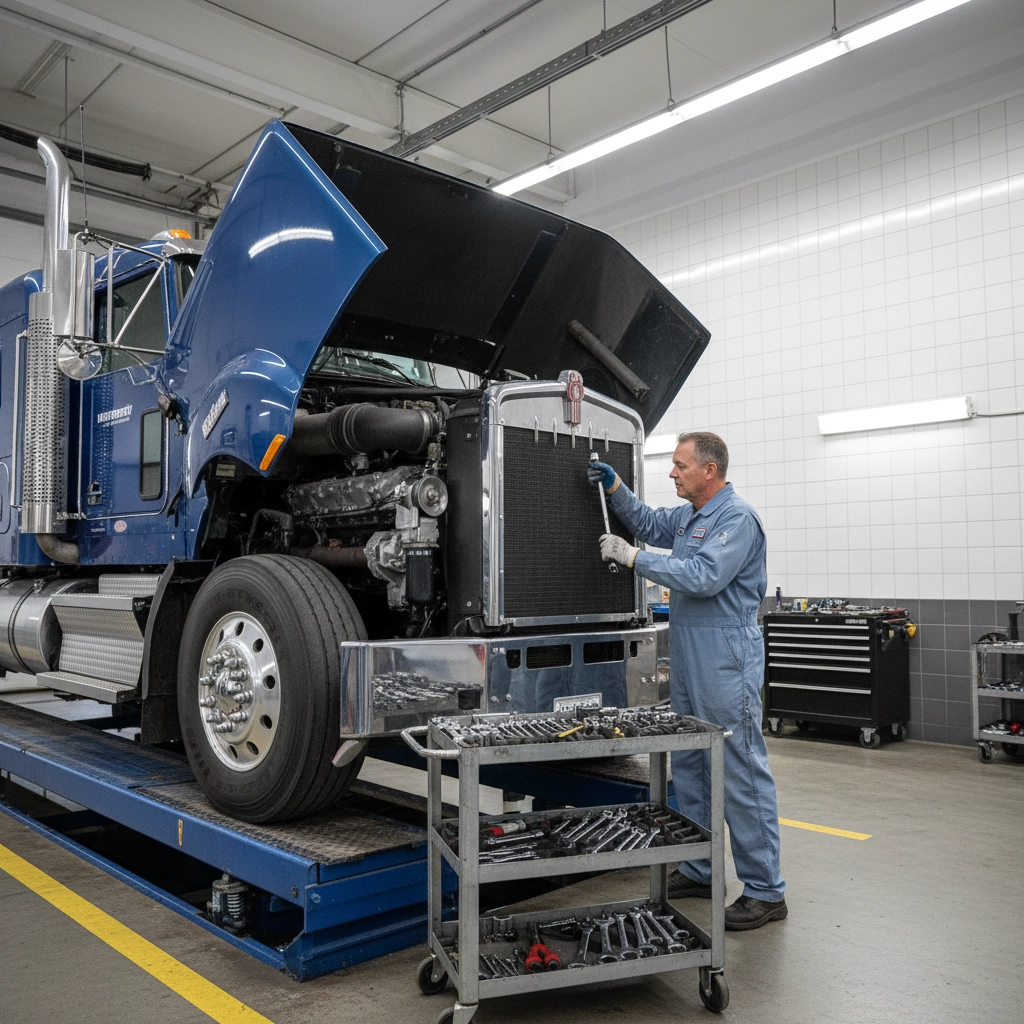
Shops that can actually diagnose and repair modern trucks quickly are worth their weight in gold. Building relationships with quality maintenance providers isn't just smart: it's essential for survival.
Building a Sustainable Approach
If you're running trucks in 2025, here's what works:
Budget Realistically Plan for $0.20-0.25 per mile in maintenance costs, not the old $0.12-0.15 figures. Build repair reserves and expect surprises.
Invest in Relationships Find good shops and pay their rates. Trying to save money on labor usually costs more in the long run through poor diagnoses and repeat failures.
Track Everything Monitor fuel economy, emissions system performance, and maintenance patterns. Early warning systems save massive money.
Consider Equipment Strategy Evaluate whether newer, more complex trucks actually save money over simpler, more reliable older equipment for your operation.
The Bottom Line
Diesel costs get the headlines, but maintenance and repair costs are the real profit killers in modern trucking. The combination of complex emissions systems, parts shortages, skilled technician shortages, and high labor rates creates a perfect storm of rising costs.
The operators who survive and thrive will be those who plan for these realities, build strong maintenance relationships, and make equipment decisions based on total cost of ownership: not just the purchase price.
Fuel costs are what they are. But maintenance costs? Those you can manage with the right approach, relationships, and realistic expectations about what it actually costs to keep modern trucks rolling.
The trucks may be more fuel-efficient than ever, but they're also more expensive to maintain than ever. Plan accordingly.
Comments